
Business and Economy in the World: Trends, Challenges & Opportunities
Summary
The global business and economy landscape is changing rapidly due to technology, trade, digital transformation, and shifting consumer behavior. This guide explains how the world economy works today, the major trends shaping industries, and the opportunities businesses can tap into for growth how technology impacts the global economy.
Understanding the Global Economy
The world economy is an interconnected network of countries, industries, and markets. When one region experiences change—such as a boom or recession—it often impacts the rest of the world.
Key factors that shape the global economy include:
-
International trade
-
Exchange rates
-
Global supply chains
-
Technological advancements
-
Government policies
-
Consumer demand
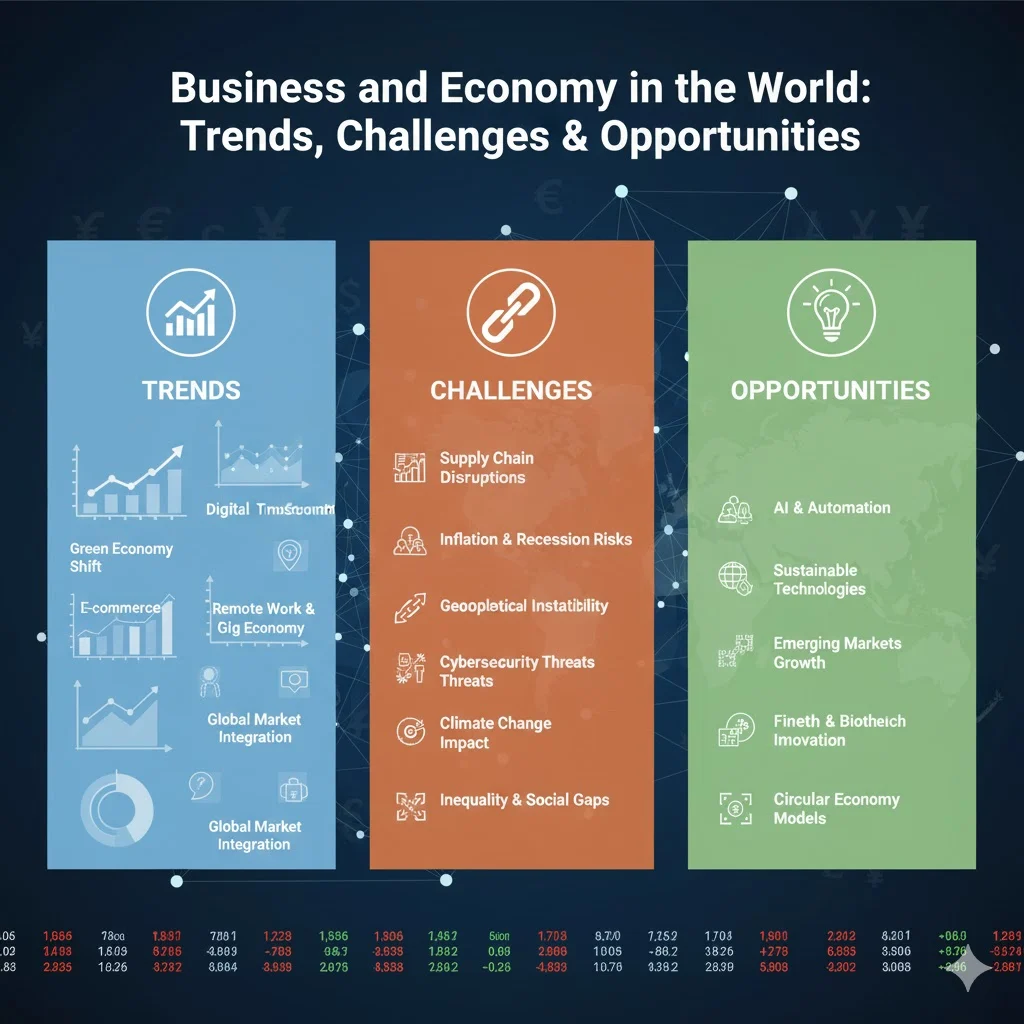
1. Major Trends Shaping Business and Economy
Digital Transformation
Businesses worldwide are adopting digital tools—AI, automation, cloud systems, and e-commerce—to improve efficiency and reach more customers.
Globalization
Companies expand across borders, offering products and services internationally. This increases competition but also opens massive opportunities for growth.
Remote Work Economy
Work-from-home and hybrid models have created new economic structures, global hiring, and digital workplaces.
Rise of Emerging Markets
Countries like India, China, Vietnam, and parts of Africa are becoming economic powerhouses due to fast development and young populations.
2. Key Industries Driving the Global Economy
Technology
Tech remains the biggest driver of global growth—covering AI, software, cybersecurity, robotics, and digital platforms.
Finance & Investment
Banks, stock markets, crypto, and fintech influence business growth and global financial stability.
Manufacturing
Global supply chains connect factories worldwide, producing everything from electronics to vehicles.
Tourism & Hospitality
A major source of income for many countries, creating jobs and supporting local businesses.
Energy & Sustainability
The shift toward renewable energy, electric vehicles, and green technologies is transforming the world economy.
3. Challenges Facing the World Economy
Inflation
Rising prices affect consumers and businesses, making products more expensive.
Supply Chain Disruptions
Events like pandemics, wars, and transportation issues can slow down production and trade.
Economic Inequality
Income gaps between countries and individuals remain a significant global issue.
Climate Change
Extreme weather impacts agriculture, housing, and global resources, affecting economic stability.
4. Opportunities for Businesses in Today’s Economy
E-Commerce & Online Business
More people shop online, creating opportunities for small and large businesses to grow digitally.
Startups & Innovation
New ideas in tech, health, finance, and sustainability have huge potential.
Global Markets
Companies can now easily sell products worldwide using digital tools and international logistics.
Freelancing & Remote Hiring
Businesses can hire talent globally, reducing costs and increasing efficiency.
5. How Individuals Benefit from Global Economic Growth
-
More job opportunities
-
Access to global markets and services
-
Improved technology and communication
-
Better education and learning resources
-
More financial tools and investment options
Conclusion
The world of business and economy is evolving faster than ever. With technology, globalization, and innovation driving change, businesses and individuals have countless opportunities to grow, adapt, and succeed. Understanding global trends helps you make smarter decisions—whether you’re an entrepreneur, a student, or someone interested in the future of the world economy.
FAQs Section
1. What is the global economy?
The global economy refers to the interconnected financial, business, and trade networks between countries. It influences jobs, trade, currency values, and global growth.
2. What are the major factors affecting the world economy today?
Key factors include inflation, technological change, government policies, global trade, geopolitical conflicts, and supply chain disruptions.
3. How does technology influence business and the economy?
Technology improves efficiency, reduces costs, supports automation, and helps businesses reach global audiences through digital platforms.
4. Which countries are growing fastest in the global economy?
Emerging markets like India, China, Vietnam, and several African nations show rapid growth due to strong development and young populations.
5. What industries drive global economic growth?
Technology, finance, manufacturing, tourism, healthcare, e-commerce, and renewable energy are major growth drivers.
6. How can small businesses benefit from globalization?
They gain access to larger markets, cheaper resources, international customers, and digital tools that support global expansion.