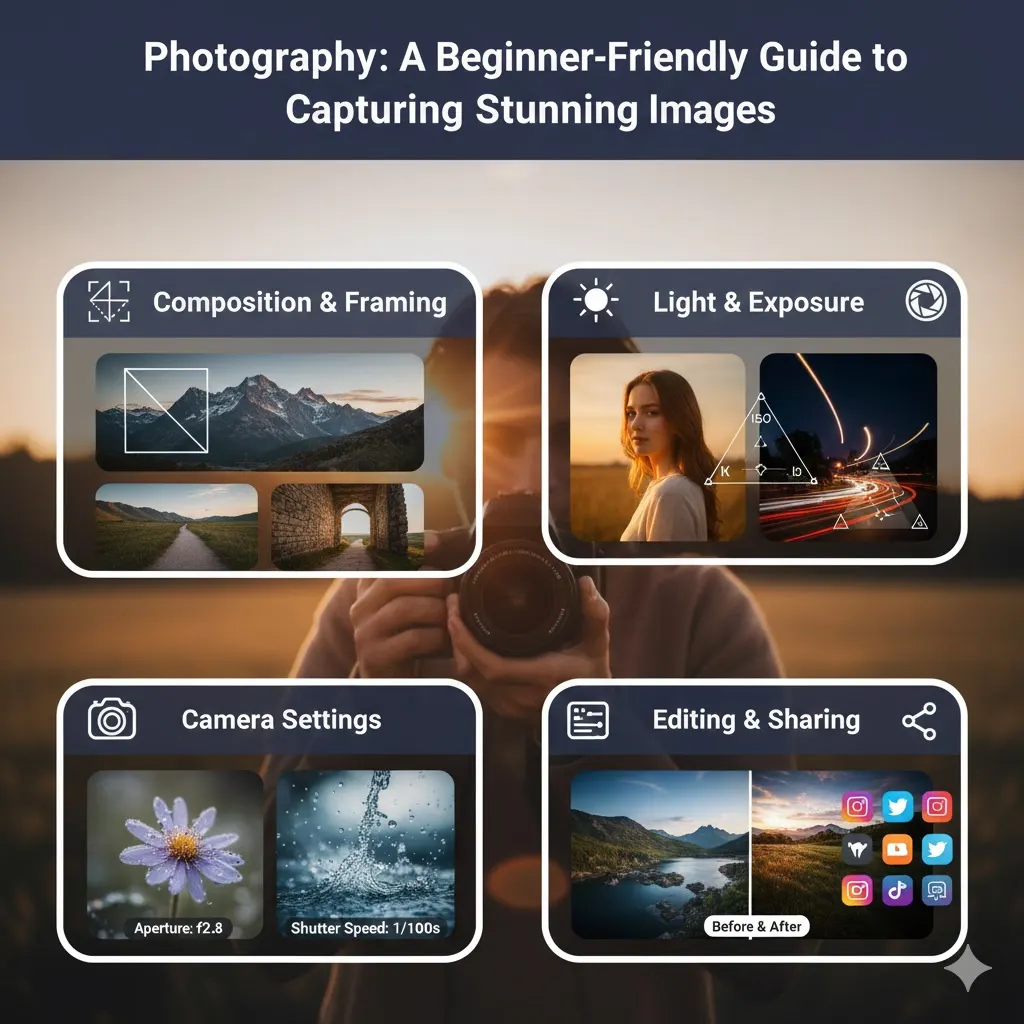

Photography: A Beginner-Friendly Guide to Capturing Stunning Images
Photography is more than just taking pictures—it’s an art, a skill, and a powerful way to tell stories. Whether you’re using a smartphone or a professional camera, understanding the basics of photography can help you capture beautiful, meaningful images. This guide covers the essentials every beginner should know to start their photography journey with confidence.
Why Photography Matters
Photography allows us to freeze moments, express creativity, and share experiences. Today, with digital tools and easy access to cameras, photography has become one of the most popular creative hobbies in the world.
1. Understanding the Basics of Photography
Exposure
Exposure determines how bright or dark your photo appears. It’s controlled by three key settings:
Aperture (f-stop)
Controls how much light enters the lens and affects background blur (bokeh).
Shutter Speed
Controls how long the camera sensor is exposed to light.
-
Fast shutter = freeze motion
-
Slow shutter = motion blur
ISO
Controls the camera’s sensitivity to light.
-
Low ISO = clean image
-
High ISO = more grain/noise
2. Essential Gear for Beginners
Cameras
You can start with:
-
Smartphone camera
-
DSLR
-
Mirrorless camera
Lenses
Different lenses offer different looks:
-
50mm prime – great for portraits
-
Wide-angle – perfect for landscapes
-
Telephoto – ideal for wildlife and sports
Tripods
Useful for low-light shots, long exposures, and stable photography.
Editing Tools
Popular beginners apps:
-
Lightroom
-
Snapseed
-
VSCO
3. Photography Styles to Explore
Portrait Photography
Focuses on people—expressions, emotions, and personality.
Landscape Photography
Captures nature, scenery, and wide views.
Street Photography
Documents daily life and real human moments.
Food Photography
Perfect for bloggers, restaurants, and home chefs.
Macro Photography
Shows tiny subjects in extreme detail (flowers, insects, textures).
4. Tips for Better Photos
Use Natural Light
Early morning and sunset (golden hour) are the best times for soft, warm lighting.
Focus on Composition
Apply simple rules like:
-
Rule of thirds
-
Leading lines
-
Symmetry
-
Framing
Keep Your Lens Clean
Dirty lenses cause blurry or foggy photos.
Practice Often
The more you shoot, the faster your photography skills improve.
5. Editing Your Photos
Editing helps enhance colors, brightness, and details. Keep your edits natural by adjusting:
-
Exposure
-
Contrast
-
Highlights
-
Shadows
-
Sharpness
-
Color temperature
Conclusion
Photography is a fun, creative, and rewarding skill that anyone can learn. With the right techniques, basic gear, and consistent practice, you can capture beautiful images that tell compelling stories. Whether you dream of becoming a professional photographer or just want to take better everyday photos, the journey starts with curiosity and passion.